Showing posts with label science. Show all posts

Tuesday, January 7, 2014

The Tech Museum of Innovation in San Jose: The Star Wars Exhibit

The Tech Museum of Innovation in San Jose: The Star Wars Exhibit

The Tech Museum of Innovation in San Jose’s current special exhibit is Star Wars: Where Science Meets Imagination through the end of February. Star Wars themed things usually disappoint me, as a die-hard, and old school Star Wars fan, so I was happily impressed with this exhibit. There are lots of original models, costumes and props from the movies. The models are very impressive, even by our more modern standards. I could really get on a much deeper level than I did before why they had been so groundbreaking back in the 70’s and 80’s.

The hands on activities are a lot of fun too. We experimented with magnetic lego hovercrafts, droids that needed to move across uneven ground, and lots of others. There is also a real (although small) hovercraft to ride on. The exhibit was not very busy when we were there, our group was the first in of the day, and we still had to work our way in to a spot for some activities. I can easily imagine that on a crowded day it could be tough to get a turn, although I do believe they limit entrances to the special exhibits to keep crowds under control.

Within in the larger Star Wars exhibit there is what they call the Millennium Falcon experience. It is an additional small cost. Basically, you get to enter a wonderful replica of the bridge of the Millennium Falcon where you watch a 4 ½ minute video through the cockpit window about our real universe and all the planets and galaxies that have been discovered. The actual video wasn’t anything too thrilling, but the Millennium Falcon was fun. There were even some switches to flip, although most of the buttons were fake, and couldn’t be pushed, I found one that was pushable. And, most importantly, it does the jumping into hyperspace bit at the beginning of the video. Still, if getting to sit in the Falcon isn’t worth five bucks to you, then skip this extra bit. There is only seating for four inside, and it runs nearly five minutes. So you can imagine that could lead to quite a wait. For example, we were in the first group into the Star Wars exhibit, and had about a 40 minute wait for our turn in the Millennium Falcon. I do have to give kudos to the staff for their solution to the wait. You can leave a cell number and get a text when your turn is up. So you don’t have to stand in line the whole time.


Thursday, August 1, 2013

Primates: The Fearless Science of Jane Goodall, Dian Fossey, and Birute Galdikas by Jim Ottaviani and Maris Wicks - Book Review

Primates: The Fearless Science of Jane Goodall, Dian Fossey, and Birute Galdikas by Jim Ottaviani and Maris Wicks - Book Review


Primated by Jim Ottaviani and Maris Wicks tells the story of Jane Goodall, Dian Fossey, and Birute Galdikas. Considering that each could only get a third of the book, I think their stories were well summarized.

I got this book mainly for myself, since I am a big fan of Fossey and Goodall. Birute Galdikas was new to me, and I was very interested to learn a little about her. My girls enjoyed to book as well, although I'm sure they are a little too young to appreciate how revolutionary these scientists were for their time.

My kids are big graphic novel fans, but I have never loved the format myself. That, in combination with the fact that I have already read a great deal about these women, at least two of them anyway, left me slightly disappointed at the lack of depth. But stepping back, I see that there is no way a book like this could include every wonderful and interesting thing about these researchers and their discoveries. This book does present an interesting introduction.

The artwork was poignant and silly in the right places for me, and open and fun enough to draw in my kids. 

I think this would be a great book for a child, or teen who is interested in this sort of research, or any of these scientists, but does not yet know much about them. I enjoyed the last section about Birute Galdikas the best; I suspect because I didn't already know anything about her, so could enjoy the story fresh. There is also a nice list of resources at the end if a child would like to learn more. 

Tuesday, June 25, 2013

Make a Scale Model Solar System - Fun Stuff to Do Anywhere

Make a Scale Model Solar System - Fun Stuff to Do Anywhere

Back when my oldest wanted to learn about the solar system for the first time, I obviously thought we should make a little model. Once I actually got a closer look at all those kits they sell in craft stores and elsewhere, I was disappointed. There was never any sort of consistent scale. For example, in most kits Jupiter is bigger than Earth, but sometimes, not by much. In some kits the sun was even smaller than Jupiter.

Now, I know making a scale model solar system is hard, but I felt so many of these kits would be misleading to young kids who don't realize how different these packaged solar system kits are from reality. They just don't do justice to the vastness and the amazing sizes they way they should. They certainly don't do much to inspire awe and wonder of the natural universe.

Thanks to Google, I was able to find this wonderful website for making your own scale model solar system:
http://www.exploratorium.edu/ronh/solar_system/

You can plug in a size (the diameter) for the Sun you want to make, then it will tell you what the diameter each of the planets should be, and their orbital distance from the Sun. Your sun will need to be big if you don't want tiny dots for planets. We were going to use a hula hoop, but ended up just making a big circle with a piece of cord so we could have bigger planets. That way, our Jupiter came out to be about the size of a Frisbee, and we then measured and cut the other planets out of paper. Then we taped the planets to sticks so they would stick up out of the ground as we placed them in their orbits.

This is one caveat of the scale model solar system - Keeping the size of the planets in scale isn't too hard, nor is keeping the orbital distance, but doing both at the same time can be very tough. For example - in our model where the Sun had a diameter of 46 inches, and our Earth's diameter came out just under a half inch, if we kept the orbital distances consistent with that scale, Pluto would have to be over 16,000 feet away from our Sun. So we ended up with two scales, one for planet size, and another for orbits. The kids looked at the numbers with me, so they sort of knew that we were changing things from what they really should be.

Still, we found the biggest park we could, and laid out our circle for the Sun, then measured off the distances to stick our planets in the right places. Even though we had to plug in different numbers until we had Pluto no more than 50 or so feet away, the final model was very impressive, and illustrated much better the amount of 'space' in the Solar System.

It was a very fun and educational afternoon for us all. I am actually looking forward to doing it all over again in a year or so for the younger kiddo. She helped the first time, but she was so little, I don't think she could appreciate it yet. It really isn't as much work as it sounds like, with the help of the calculator at the Exploratorium website linked above. It is a very worthwhile activity.


Thursday, May 16, 2013

Geocaching Part 1 - Planning


Geocaching Part 1 - Planning

I promised awhile back to write a more extensive post about geocaching with kids. However, I don’t want to overwhelm with a super long post, so I will be dividing the process up. So here is part 1: planning your geocaching outing. Spring and Summer can be a great time to try out geocaching if you’ve never tried it before. We went out today and found three caches. I’m going to give an account of what we did as an example of how geocaching works. I’m going to do my best to avoid including any details that might provide hints about the location of the caches we found so I don’t accidently share any caching spoilers.

First, I visited http://geocaching.com and pulled up the map of the Regional Park we planned to visit, to see what sorts of geocaches were there. What I consider when planning a geocaching outing with my kids:

-          The difficulty rating for the cache. While 3 and 4 star difficulty caches are very rewarding for me to find, my kids usually lose interest in searching well before I do. I stick to 1 and 2 star, maybe 2 ½ when they are caching with me to keep it fun.

-          The terrain rating. For this I stick to a 3 ½ star rating or under, even on my own because I’m not all that fit. I don’t want to have to do any climbing or other difficult maneuvers to reach a cache. There may be a 3 or a 3 ½ I won’t be able to get to, but so far those have been obtainable for us even if slightly tiring if they are up a steep hill or something similar.

-          The size of the cache. The kids love the cheep silly ‘swag’, or treasures that are available for trade inside some geocaches. Micro caches are often to small to hold any swag. I try to make sure most of the caches we will be searching for on an outing are ‘small’ or larger. Sometimes a hide is so clever and fun on its own they enjoy finding it just for the sake of finding it (as I do) but usually, they want the swag.

-          The hike involved. We are tackling longer hikes as time goes along and they grow, but I still have to consider a hike length that will keep things fun for them. Sometimes we will skip the hike all together and focus on finding ‘urban’ caches. These are ones that are hidden in parking lots, or neighborhood playgrounds, or sometimes inside local businesses. We found one on the bookshelf at our library! The downside to urban caches is that they tend to be small because it is harder to hide a geocache in a busy area. It can also be harder to search in a high traffic shopping center, for example, without strangers wondering what you’re up to.      
           
For your first geocaching outing consider looking for a ‘beginner’ cache. When you visit http://geocaching.com and  under the “Play” tab pick “Hide or Seek a cache” then enter the area you want to look in, you will be shown a list of caches in that area. Caches that the hider thinks would be good for a beginner will be highlighted in green.

Next time I’ll go over what to take with you on your geocaching outing.

Tuesday, May 14, 2013

The Great Bug Hunt – Fun Stuff to Do Anywhere


The Great Bug Hunt – Fun Stuff to Do Anywhere

I don’t remember why my kids and I started hunting for bugs, but afterwards, I was amazed with how much fun it was. Even the littlest one, who normally doesn’t like bugs – is even afraid of some – put her fears and disgust aside to join in the hunt.

We had gone out for a short hike, but The Great Bug Hunt would work at your local park or playground, or even your back yard. All you do is look for bugs. As many different kinds as you can find, and announce to the rest of the group when you spot one. Ants, butterflies, ladybugs, bumblebees, flies, and any other bugs you come across all count.

That’s it. Thant’s the whole game. I know it doesn’t sound like much, but try it out anyway, and let me know how you like it.


Tuesday, April 23, 2013

Make Flowers Change Colors - Fun Stuff To Do Anywhere

Make Flowers Change Colors - Fun Stuff To Do Anywhere


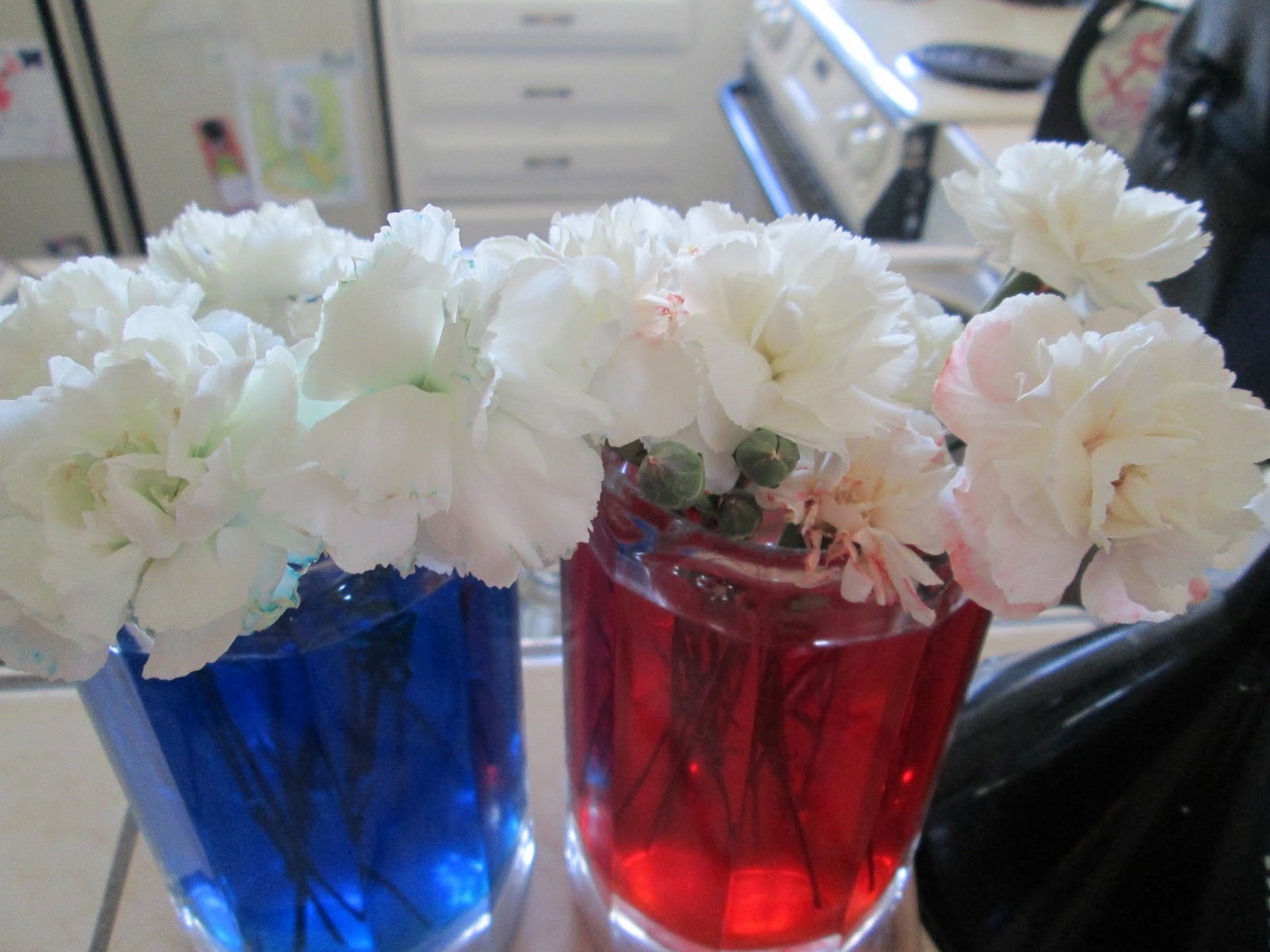
While studying plants recently, we decided to try the age-old flower dying experiment. Although we didn't have as much success as we have had in the past (when my oldest did this same experiment), we are still starting to see some color change, and the kiddo had fun with it.

All you do is add some food coloring to a vase of water, then add your flowers. White flowers tend to work the best - make sure to give then a fresh cut stem before putting them into the colored water. Although, kids will often use a celery stalk as well. I think it's better if there are some leaves still on the celery as opposed to the pre-cut ones.

This experiment shows how plants pull water up through their stems into their petals
 and leaves.

Thursday, February 14, 2013

NASA Ames Research Center at Moffett Field

NASA Ames Research Center at Moffett Field

NASA Ames Research Center has an Visitor Center Museum that is free to the public and open Tuesdays through Fridays from 10am to 4pm, and Weekends from Noon to 4pm. They are closed on Mondays and Federal holidays.

Even though the museum looks small, my daughter and I spent the hour we had available there, and could easily have spent more time if we'd been able. It isn't that there is so very much to see, but many of the exhibits are interactive, and includes some games that she wanted to spend considerable time on. I eventually had to pull her away so we didn't miss our tour.

Fortunately, there is also a free website where they offer very similar games, if slightly simpler,  to the ones she enjoyed at the NASA Visitor Center. It is at: http://www.scigames.org/

From their website, it sounds as if the exhibits in the Visitor Center change on a fairly regular basis. If you visit the NASA Ames Visitor Center web page you can also see a schedule of events and presentations that happen throughout the day so you can time your visit accordingly if there is something your family would be interested in.

The NASA Ames research Center also offers free school and homeschool group tours. That was the main reason we made the trip there. We just stopped to check out there Visitor Center since we made it to Mountain View so early, and I'm glad we did. The Visitor Center would have been closed at the end out our field trip, and it was well worth the time we spent there.

Although I did not set up the field trip myself, I was lead to understand that setting one up is more complex than other field trips might be. Moffett Field is a working NASA research center and they take security seriously. I believe the mom who organized our group had some hoops to jump through, and as a chaperone  I had to make sure I had registered with our group appropriately, and had my identification all in order. Despite all of this, the trip was amazing and wonderful. When my youngest child is old enough, I would not hesitate to put in the work needed to set up a tour for her. And, on the plus side, it was all free.

The trip is aimed at kids in 4th through 6th grades. They get to do a lot of hands on guided lessons. They even did two mini 'missions' that involved assigned age-appropriate research tasks, and communicating their finding to the rest of their crew.

Information about how to set up a field trip is also available at the same link for the Visitor Center.

Tuesday, February 12, 2013

Stomp Rockets - Fun Stuff to Do Anywhere

Stomp Rockets - Fun Stuff to Do Anywhere

Since we have had such beautiful weather lately, it's been nice to get outside. Stop Rockets are a great outdoor, park going activity.

Stomp rockets work by forcing air up a tube into the hollow inside of the rocket and launching it into the air when the end of the tube is 'stomped' on. There are a lot of different brands that can be found at hobby shops or toy stores.

Kids love rockets, at least, every kid I've ever met. I'm sure there are some out there somewhere that don't. It takes them a long time to get tired of stomping. Then there's all that running after the fallen rockets to retrieve them, which is great exercise.

There is even a little bit of science and experimentation involved as they try stomping harder of softer and adjust the angle to see what will happen.

We have the rockets pictured below. I like them because they don't go too high, and are safe to use in our local park. I also found a book about how to make your own. That sound like a lot of fun too!


Tuesday, January 29, 2013

Plant Seeds Inside – Fun Stuff To Do Anywhere


Plant Seeds Inside – Fun Stuff To Do Anywhere

This is a good time of year here in Northern California to start some seeds indoor for your spring garden. We are still having frequent frosts overnight in many places around the Bay Area, but when you start your seeds indoors, they can germinate in the indoor protected environment, and you will have nice big seedlings ready to go into the garden later in the spring.

Kids love planting seeds too, and watching them grow. There are lots of inexpensive kits you can find for starting seeds indoors: small seed cups or plastic trays for miniature indoor greenhouses. If you don’t want to mess with getting a kit, just use a regular pot that fits on a sunny window in your home, and cover it with saran wrap until your seeds sprout.

For indoor seed starting, you want to plant things that can be transplanted outdoors later on. We like to start tomatoes, bell peppers, peas and beans, squash, and melons inside. Smaller vegetables that don’t transplant well, like green onions, radishes, and carrots we will wait and plant directly into the garden later in the spring. 

Thursday, January 24, 2013

Gulf of the Farallones National Marine Sanctuary in San Francisco


Gulf of the Farallones National Marine Sanctuary in San Francisco

The Visitor Center for the Gulf of the Farallones National Marine Sanctuary is located in Crissy Field in San Francisco. It isn’t a large marine museum, but there are still some very neat things to see. The Farallones Sanctuary visitor center is open Wednesdays thru Sundays from 10 to 4, and is free of charge to visit.

The Marine Sanctuary also offers several public and school programs. Although we have never attended a program our homeschool program offered an in school program a couple of years ago that we really enjoyed. It appears that the main Gulf of the Farallones National Marine Sanctuary website, linked above, is not up to date for their current program offerings. However there is another website, for the Farallones Marine Sanctuary Association that is where you would find the best information about their programs and how to schedule your own or attend one they are putting on.

Our visits to the center took us less than an hour, but since it is located in Crissy Field in the Presidio, and right on the beach, our family had even more fun walking along the waves and watching the beach wildlife. 

Thursday, January 17, 2013

The Tech Museum of Innovation in San Jose


The Tech Museum of Innovation in San Jose

We visited the Tech Museum in San Jose in early January when most schools were still on winter break, yet not all were. So there were still some school groups there during our visit.

I have very mixed feelings about the Tech. We primarily went to see the special Myth Busters exhibit before it ended. I don’t want to go into a review of that too much since it is now ended (but it was wonderful!) but the Tech does offer other special exhibits for limited amounts of time. It’s worth it to check out their website to see what special shows they have going, and what others might be coming up so that you can plan your trip for something that would be of the most interest to your family. The downside is that the special exhibits have an additional charge above the general admissions cost. We were lucky enough to go as part of a group, which offered us a wonderfully discounted rate for both the special exhibit and the rest of the museum.  If you think you can get a group together, it would be a significant savings to everyone.

Also, for homeschoolers, or other groups, the Tech offers many workshops and classes at good rates, and I believe these also include admission to the museum as well. I have not attended such a class, but I have heard from friends that the ones they attended were fun and successful.

Aside from the Myth Busters exhibit, I found myself a little disappointed in the rest of the museum. There were certainly lots of interesting and hands on things to see and do, but I often felt like there was little to no explanation of the science involved. Those exhibits that did have useful signs explaining the science were not explanations that were accessible to children.

However, the very few exhibits that had a docent or museum volunteer stationed with it were wonderful. They were very accessible. They wouldn’t wait only for questions, but would jump in to demonstrate or ask questions to the children to encourage them to try different things. Those exhibits are the only ones that I felt my kids walked away from having learned something, instead of just playing with pretty lights that they didn’t understand.

One interesting feature that I don’t think we used to its best benefit is a ticket tracking program. Each entry ticket has a bar code that can be scanned at numerous (almost all) exhibits throughout the museum. Some just take a photo of you at the exhibit. Not a great photo, sort of a security camera grainy photo, but still neat. Some record your activity for that project. Then you can use the number on your ticket to access online all the things you recorded during your visit. Pretty darn cool.

A personal pet peeve of mine was partly to blame with my lack of enjoyment, and that’s poorly supervised school groups. There were enough of these kids all over the place to really make it difficult to enjoy each exhibit. It was not unusual for my youngest to be pushed (or edged) off a station she was working at, or for kids to shove ahead of us as we waited for a turn at something. Enough that I had to scold other’s children more than once as they were rude of mean to my small child as their chaperone stood on watching.  A friend told me that they have enjoyed the museum more when they go in the later afternoon instead of right at opening, because the school groups are starting to leave by that time of day. I think if we ever return, we will go on a weekend or in the afternoon as well.

If you plan to be at the museum at lunch time, I strongly recommend bringing a packed lunch, or preparing to leave to eat at on outside restaurant. The in house restaurant was packed with long lines and no seating at lunch time so that we ended up leaving all together when we were too hungry to keep exploring. The website says they don’t allow food in the exhibits, but I believe as long as you keep your food packed away, and only eat in the eating area (or outside if you can’t find a spot to sit) all should be fine.

Despite all the little annoyances that pushed my personal buttons, my kids had a fabulous time at The Tech, and have asked many times since to go back. I am certainly happy we went, and loved the Myth Buster exhibit, but I know when we make another trip down to San Jose, there are some things I’ll do differently.

Tuesday, November 20, 2012

Measure the Rain – Fun Stuff to Do Anywhere


Measure the Rain – Fun Stuff to Do Anywhere

With the rainy season starting up here in the California Bay Area, and reports on the news of storms in other parts of the country, my kids have been very interested in the weather lately. Weather can be a fun topic to learn about together. Even just tracking the weather can be fun.

Help your child make a simple chart to keep track of the weather for a period of time, however long you think they may be interested. It can be as simple as drawing a picture of what the weather was like each day, or older kids could take measurements of the temperature, or other factors they are interested in. Maybe they’d like to compare the weather forecast to what actually happens.

Making a rain gauge is easy to do, and kids like to measure things. I remember being fascinated with our rain gauge when I was a child. Here are the first two results I found when I Googled how to make a rain gauge (but the later links were all basically variations of these same instructions):


Sunday, December 5, 2010

Larwrence Hall of Science in Berkley


We're big fans of science museums (as you may have been able to tell by the reviews listed here so far), but the Lawrence Hall of Science is one of our favorites. It's among the great hands-on science centers of the Bay Area. It's also a little less expensive than many of the other big science museums, right now running at $6.00 to $9.00 for kids and $12.00 for adults, kids under 3 are free.

One of the things we like best about the Lawrence Hall of Science is that it has generally not overwhelmingly crowded when we've visited. We may have to wait a moment to take a turn with an experiment or a table, but most of the time we don't. Usually the stations we have to ration ourselves with and share the most are the big, new ones in the main lobby. There is usually enough room to move, and take time at each science station without feeling like other as hovering around waiting for us to move.

My oldest daughter took a one-day workshop on animal adaptations that she told me she enjoyed very much. I only peeked through the window from the hall, but the group of kids all looked enthralled with the class.

Some of the exhibits change every few months or so and you can see both the current and upcoming themes on the Lawrence Hall of Science website. There are also many exhibits that stay the same all the time, so not everything will be brand new if you visit a few times a year.

The only thing I've been disappointed in was the planetarium show. It's a fairly small planetarium, so the host/speaker is very accessible for asking questions of, which is nice, but the shows we've seen have been underwhelming. One of the shows we watched was projected with a regular projector as a traditional rectangular screen, which made viewing very difficult for anyone sitting underneath it in the circular room. It seem to be a waste of a domed planetarium to me. On the upside, tickets are very cheap, only $4 (it isn't included in the admission cost). But if you're short on time, or unsure if you want to stop and see a show, I'd pass and stick with the other great options available at the museum.

Tuesday, March 24, 2009

California Academy of Sciences


The California Academy of Sciences is such a wonderful place; it's really hard to say anything negative about it. However, on our first visit there since the museum re-opened, we all agreed that it wasn't what we'd been expecting.


We expected a lot of extinct animal bones and dioramas. There were a few of these around, but only a very few. Live animals have replaced most of the bones. I see now why they no longer call it the Museum of Natural History. The focus is much more on current events, and less on history. There is a large section devoted to global warming, for example. Although maybe calling it the California Academy of Biological Sciences, or Natural Sciences would be more accurate. Biology, Zoology, Evolution, and other such sciences are well represented, but not so much Physics or other sciences.


It was a little too much information for our kids, since they're so small, but they were also free to get in, so that's fair. In a few years, they could really get a lot out of a visit. As it was, they really loved the aquarium especially, and we had trouble dragging them away from a few tanks.


We spent a little bit of time in the "Explorer Cove" that is a special area just for kids under 6 years old. There are some puzzles, but there isn't much 'exploring' to be done there. It's really just a dedicated play area. The kids loved it in there, playing with stuffed animals, and climbing around, but I may have skipped it for other exhibits if I'd know there weren't any kid displays inside. Or at least saved it for when we needed a break. We made the mistake of heading there first.


We almost skipped a visit into the Rainforest because the line looked intimidating. I'm glad we decided to go anyway. It looked like a long wait, but the staff does a great job of keeping the line moving quickly. Traveling through the rainforest layers, while butterflies flutter past your head is well worth the trouble to get inside.

I was not quite prepared for the crowds. We visited on a Sunday, and the place was packed. Wall to wall. If you aren't a fan of crowds, you may want to try visit on a weekday, although I hear that it gets crowded then too, but I imagine it must be better, right?


One other mistake we made, was waiting until we'd browsed around awhile before asking about the planetarium show. By then all the tickets for the day were gone. So be warned: if you want to see the show, go early, and ask for tickets as soon as you're in the door. If anyone reading this has seen the show, let me know what you thought of it in the comment section, okay?

Wednesday, January 14, 2009

Explorit Science Center in Davis California


Davis may be pushing the boundaries of what can technically be called the "Bay Area", but the Explorit Science Center is such a neat little place, I just have to include it here. Also, biased on the tiny crowd the day we visited, it may also be a well-kept secret. More people need to know about this little treasure.


While much smaller than other science Museums like San Francisco's Exploritorium, or even the Laurence Hall of Science in Berkley, the Explorit Science Center is still well worth a visit. Everything there is very hands-on and kid friendly.


Some are quickie experiments, and others require more thoughtfulness and you may want to take your time to really get the most of them. For example, there was a fun station that included a large fan and a variety of items to put above the fan to see how each item behaved as it was blown up into the air. You can imagine how much fun kids have with that! Then another station that we spent quite a long time at was a bridge building experiment. All kids of building materials are provided: blocks, K'nex, and many more. Children (and grown-ups) use these to build small bridges that they can then test out with different weights provided. There are really too many exhibits to mention, and they also rotate through different themes. The "Move It" exhibit was going on when we visited, which was about exploring motion. You can visit the Explorit Science Center website to get the most current program information.


Another great thing about Explorit is that they offer free admission every 4th Sunday of the month. We went on one such free day, and even with free admission, there was plenty of space for us to take out time at each station. I'd expected bigger crowds. Now that we've been once, I know it would be well worth the small $4.00 admission charge to go back on another day. (Children 3 and under are always free.)


Explorit Science Center also offers group and school programs, and you can find information about these on their website. The main Explorit museum is located at 2801 2nd Street, Davis, California.